Grooming advice spreads the same way gym advice does: someone says something confidently once, and it gets repeated for a decade without anyone checking if it's actually true. Some of these myths are harmless. Others are quietly costing you money on products you don't need, or working against the results you're actually trying to get. Here are five that deserve to retire.
"You should wash your hair every single day"
Daily showers mean daily shampoo, right? For a lot of guys, washing hair is just an automatic part of the routine, no different from brushing teeth.
Daily shampooing strips natural oils that actually protect and condition your scalp, which can leave hair drier, more brittle, and paradoxically trigger your scalp to overproduce oil to compensate. Most dermatologists recommend washing hair with shampoo every 2 to 3 days for most hair types, rinsing with water on off days if needed. The exception is genuinely oily hair or heavy product use, which may need more frequent washing. Daily rinsing is fine; daily shampooing usually isn't necessary.
"Hot water opens your pores, cold water closes them"
This one shows up in skincare routines everywhere: steam your face to "open" pores before extractions, splash cold water after to "close" them back up and lock everything in.
Pores don't have muscles, so they can't physically open or close in response to water temperature. What's actually happening is that heat can temporarily soften the debris inside a pore, making extractions or deep cleansing marginally easier, and cold water causes a temporary, minor tightening of skin around the pore that has nothing to do with pore size changing. Pore size is determined mostly by genetics, oil production, and age, not by your last shower's temperature. Cold water isn't harmful, it just isn't doing what the myth claims.
"Expensive skincare always outperforms drugstore products"
A $90 moisturizer in nice packaging feels like it has to be doing more than a $14 tube from the drugstore aisle. Price gets treated as a proxy for effectiveness.
What actually determines whether a product works is the active ingredients and their concentration, not the price or the brand's marketing budget. A lot of dermatologist-recommended staples, like CeraVe's ceramide-based moisturizers, are inexpensive precisely because they focus spending on formulation rather than packaging and marketing. Expensive doesn't mean bad, but it also doesn't automatically mean better. Check the ingredient list before the price tag.
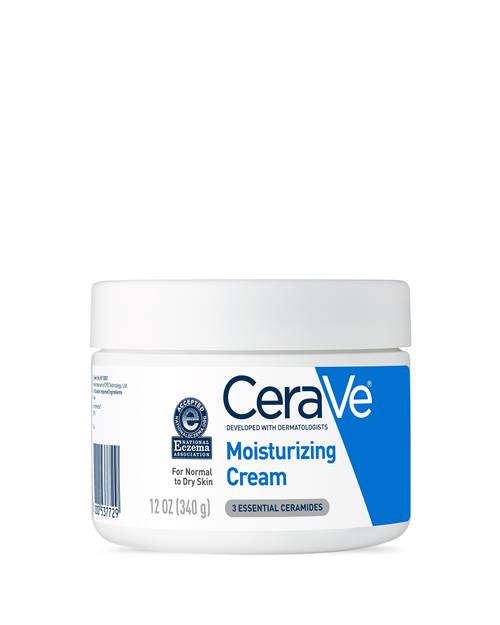
CeraVe Moisturizing Cream
Dermatologist-developed with three essential ceramides and hyaluronic acid. Holds the National Eczema Association Seal of Acceptance. A fraction of the price of prestige moisturizers with comparable, sometimes better, formulation.
"Exfoliating every day gives you smoother skin, faster"
If a little exfoliation clears dead skin and makes a difference once a week, daily exfoliation must speed up the results, right? More scrubbing, more glow.
Skin has a natural barrier that daily exfoliation actively breaks down, leading to redness, sensitivity, and ironically more visible texture problems, not fewer. Most dermatologists recommend chemical exfoliants like salicylic or glycolic acid 2 to 3 times a week for most skin types, not daily. Over-exfoliated skin often looks worse than under-exfoliated skin, since a compromised barrier shows every bit of irritation and dryness underneath.
"Natural and organic ingredients are always safer for your skin"
"Natural" on a label reads as automatically gentler and safer than anything with a chemical-sounding ingredient name, so plenty of guys default to natural or organic-labeled products assuming it's the lower-risk choice.
Natural origin has no bearing on whether an ingredient is safe, effective, or non-irritating. Poison ivy, tree nuts, and citrus oils are all natural and all common causes of allergic reactions and irritation. Meanwhile many lab-formulated ingredients, like the synthetic ceramides in CeraVe or the salicylic acid in most acne treatments, are extensively tested and among the most reliably effective, gentle options available. "Natural" is a marketing category, not a safety or efficacy standard. Judge a product by what it actually contains and how your skin responds, not by what's on the front label.
Every myth on this list survives because it sounds plausible and gives you something simple to act on. The actual science is less dramatic: wash less than you think, ignore the hot-and-cold water routine entirely, read ingredient lists instead of price tags, exfoliate a few times a week instead of daily, and judge products by formulation instead of buzzwords. None of that makes for a catchy tip, but it's what actually works.
What to Focus On Instead
Consistency over frequency
A simple routine used consistently beats an aggressive routine used inconsistently almost every time. Fewer, better steps, done daily, outperform an ever-changing stack of products.
Ingredients over marketing
Ceramides, hyaluronic acid, niacinamide, salicylic acid, and retinoids have real research behind them regardless of what brand they're in or how much the bottle costs. Learn the five or six ingredients that matter for your skin type and check for them specifically.
Patch test before you commit
Whether it's a $12 drugstore serum or a $90 department store one, test anything new on a small area for a few days before applying it to your whole face. That's a better predictor of how your skin will react than the price or the ingredient origin story.